

Heating Installation in San Antonio TX — Replace or Install With Confidence
- Flexible Financing Available
- Free In-Home Assessment
Is It Time to Replace Your Heating System? Let's Find Out Together
If you’re researching heating installation in San Antonio, you’re probably somewhere between “my system works but it’s getting old” and “I can’t face another winter with this thing.” EMAX HVAC helps homeowners across Bexar County make that decision without pressure — starting with a free in-home assessment and ending with a heating system sized, specified, and installed to actually match how your home uses energy. No guesswork, no rushed quotes over the phone, no upselling you into a system twice the size you need.
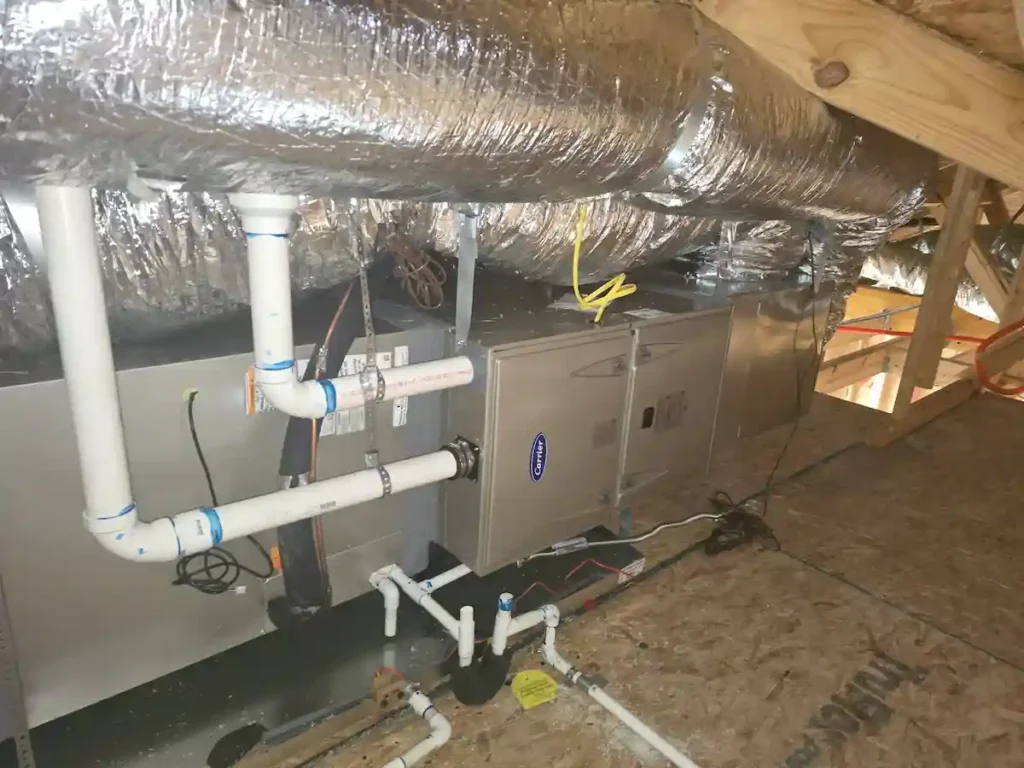
Repair or Replace? How to Know It's Time for a New Heating System
Not every failing heater needs to be replaced. Some systems just need a part, a tune-up, or a component swap. Others are quietly costing you more in energy and repair bills than a new system would over the next five years. Here’s how professional HVAC contractors actually make that call
Your system is 15+ years old
Gas furnaces typically last 15–20 years in San Antonio’s climate; heat pumps, 12–15. Once you’re past the manufacturer’s expected lifespan, every repair is a coin flip on the next one.
Recent repair costs are climbing past 50% of replacement cost
The standard industry benchmark: if a single repair costs more than half of what a new comparable system would cost — or if your last three repairs combined cross that line — replacement is almost always the better investment.
Utility bills are rising despite regular maintenance
Efficiency drops with age. A 12-year-old 80% AFUE furnace or an early-generation heat pump is working harder every season to produce the same heat, and you’re paying for that difference on every CPS Energy bill.
Rooms heat unevenly or the system short-cycles
Uneven heating usually means the system is wrong-sized for the house, the ductwork is failing, or the unit is losing capacity. A new load calculation and properly sized installation fixes all three at once.
Safety concerns — cracked heat exchanger, CO detector activity, or visible corrosion
These aren’t “maybe later” problems. A cracked heat exchanger can vent carbon monoxide into living space. If your technician has flagged any of these, replacement is the only responsible path forward.
Still not sure where you land? Our heating repair team can diagnose first and give you a straight answer about whether repair makes sense — or whether you’re better off putting that money toward a new system.
Choosing the Right Heating Installation for San Antonio's Climate
San Antonio sits in ASHRAE climate zone 2A — mild winters with occasional hard freezes. That climate profile changes which heating system actually makes sense for your home, and it’s the reason a system that works great in Dallas or Houston isn’t automatically the right fit here. These are the four installation options we most commonly recommend
High-Efficiency Gas Furnace (80–96% AFUE)
Best for: homes with existing natural gas service, homeowners who want lowest upfront cost and proven reliability, larger homes that need strong heat output during cold snaps.
A modern gas furnace is still the default answer for many San Antonio homes — especially if you already have a gas line running to the unit. Mid-efficiency (80% AFUE) furnaces have the lowest installed cost; high-efficiency condensing units (90%+ AFUE) cost more upfront but reduce operating costs meaningfully over the life of the system. Explore furnace installation options if you’re leaning this direction.
Air-Source Heat Pump
Best for: all-electric homes, homeowners focused on long-term operating cost, homes that also need AC replaced at the same time.
Heat pumps cool and heat from the same outdoor unit, which means one system replacement gives you a complete HVAC upgrade. In San Antonio’s mild winters, modern heat pumps run efficiently most of the heating season. The trade-off: during extended freezes below ~35°F, auxiliary electric heat kicks in and operating cost rises temporarily. Full details on heat pump systems.
Dual-Fuel System (Heat Pump + Gas Backup)
Best for: homes with existing gas service that want maximum efficiency year-round, homeowners in premium communities who prioritize comfort and long-term value over upfront savings.
A dual-fuel setup pairs a heat pump (for most of the season) with a small gas furnace (for cold snaps). The system automatically switches to whichever fuel source is more efficient at the current outdoor temperature. It’s often the best long-term match for San Antonio’s climate — and it’s what we most frequently recommend for homes in The Dominion, Stone Oak, and Cordillera Ranch where homeowners plan to stay 10+ years.
Ductless Mini-Split System
Best for: homes without existing ductwork, room additions, converted garages, or zoned heating for specific areas of the house.
If your home has no ducts — or if you’re heating a space the main system doesn’t reach well — a ductless mini-split system installs without tearing into walls and lets you control each zone independently. It’s the right answer in specific situations, not a universal recommendation.
EMAX HVAC installs complete heating systems across San Antonio and surrounding premium communities including Stone Oak, The Dominion, Alamo Heights, Terrell Hills, Shavano Park, and Cordillera Ranch. For San Antonio’s mild-winter climate with occasional cold snaps, we most often recommend either a high-efficiency gas furnace for homes with existing gas service or a dual-fuel system pairing a heat pump with a gas backup for cost-efficient year-round operation. Every installation starts with a free in-home assessment and a proper Manual J load calculation — not a guess based on square footage. All work is performed by licensed HVAC technicians with full workmanship warranty and manufacturer parts coverage. Call 210-920-1412 to schedule your free assessment.
Licensed, Insured, and Backed by Warranty
Every heating installation EMAX HVAC performs is handled by licensed HVAC technicians and backed by both manufacturer parts warranty (varies by system and brand, typically 5–10 years) and our own workmanship warranty on installation labor. We pull every required permit, follow all local code requirements, and provide complete documentation on project completion.
Heating Installation Across San Antonio and Surrounding Communities
EMAX HVAC provides professional heating installation throughout the San Antonio metro area. We work regularly in premium communities including The Dominion, Stone Oak, Alamo Heights, Terrell Hills, Shavano Park, and Cordillera Ranch — neighborhoods where homeowners expect installations to be done right the first time and maintained properly for the life of the system. If you’re in greater Bexar County or the surrounding hill country, we can schedule your free in-home assessment at a time that works for you.
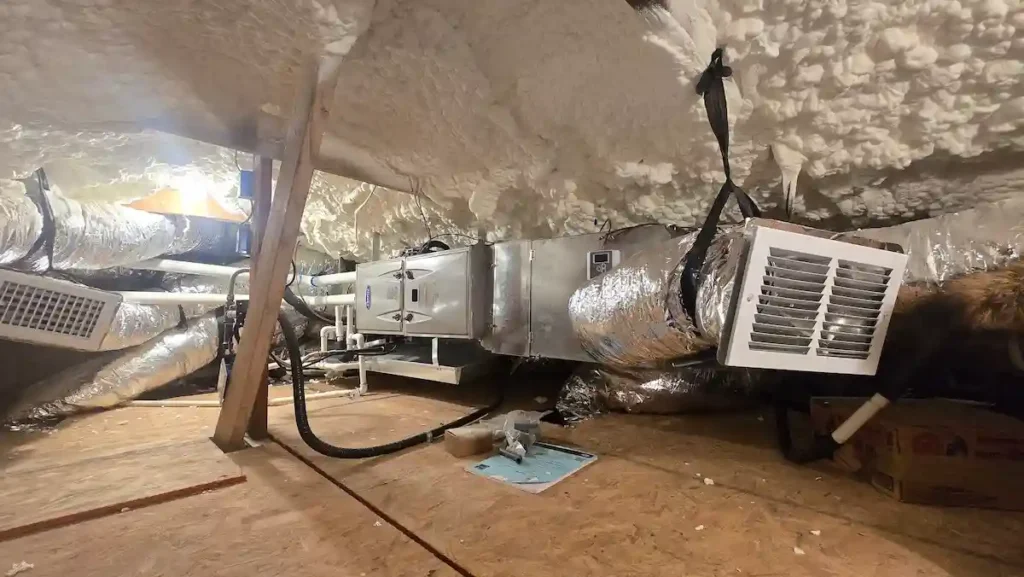
Heating Installation FAQs — San Antonio Homeowners Ask
How long does a full heating system installation take?
Most complete heating installations are finished in 1–2 days. A straightforward furnace replacement using existing ductwork can often be completed in a single day. Dual-fuel installations, ductless systems with multiple zones, and installations that require ductwork modifications or electrical upgrades typically take 2 days. You’ll know the expected timeline when we present your quote.
Do I need a permit to install a new heating system in San Antonio?
Yes. The City of San Antonio requires permits for HVAC equipment replacement and new installations. We pull all required permits as part of your installation — you don’t need to handle any paperwork with the city. Permit fees are itemized separately on your quote so you see exactly what they cost.
What size heating system does my home need?
System sizing should be done with a Manual J load calculation — not estimated from square footage alone. The calculation accounts for your home’s insulation, window count and orientation, ceiling height, ductwork, and local climate data. An oversized system short-cycles, wastes energy, and fails earlier; an undersized system can’t keep up during cold snaps. We run a full load calculation on every installation assessment at no charge.
Can I reuse my existing ductwork with a new heating system?
Often, yes — but only after inspection. If your ductwork is properly sized, sealed, and in good condition, reusing it saves significant cost. If it’s undersized, leaking, or damaged, reusing it will compromise the performance of your new system and cost you more in the long run. We inspect every duct system during the assessment and tell you honestly what we find.
What warranty comes with a new heating installation?
Every installation comes with two layers of coverage: the manufacturer’s parts warranty on the equipment (typically 5–10 years depending on brand, system, and registration), and our own workmanship warranty on the installation labor. Warranty details are included in your installation packet and explained during your walkthrough
Should I replace my AC at the same time as my heating system?
If both systems are near the end of their lifespan, replacing them together is usually more economical than doing them separately — you pay one installation labor cost instead of two, and the new systems work together as an optimized matched set. This is especially true if you’re considering a heat pump or dual-fuel system, since those solutions cover both heating and cooling in one installation. If your AC is less than 8 years old and working well, there’s usually no reason to replace it early.
Ready for a More Efficient Heating System? Let's Start With a Free Assessment
No obligation, no hard sell, no phone quotes pulled out of thin air. Schedule a free in-home assessment with EMAX HVAC, get a proper load calculation, and receive a transparent written quote for a heating installation sized and specified for your home. Then you decide — on your timeline, with all the information in front of you.